What pet friendly should really mean in the desert
In Palm Springs, the phrase pet friendly can mean almost anything. Some hotels simply allow pets in one ground floor room, while others welcome every dog as a true guest with water bowls, pet beds and shaded courtyards. You will want to read every policy line, because the right hotel will shape your entire stay with your furry best friend.
Start with the basics before you book any Palm Springs pet friendly hotels. Ask whether the hotel has a fully enclosed area or at least dog friendly patios where pets can safely sniff around without a leash, and confirm that there is no strict weight limit that quietly excludes larger dogs. Clarify the nightly pet fee in advance, because a low base room rate can hide a surprisingly high charge that multiplies quickly over several nights.
Families heading to southern California often assume any pet friendly label guarantees comfort. In reality, some hotels still restrict pets to older rooms, or require that dogs never be left alone even briefly, which can make restaurant meals difficult. When you call, ask whether guests may leave dogs crated for short periods, and whether the property offers courtesy bags, outdoor trash bins and easy late night access for quick walks.
Choosing your base: Palm Springs, Yucca Valley or Rancho Mirage
The greater Palm Springs area stretches from palm lined downtown streets to the quieter edges near Yucca Valley and Joshua Tree. If you want to walk to restaurants with your dog in the evening and browse shops with your pet at your side, central Palm Springs works best for a short stay. Families who prefer space, silence and starry skies will often feel more relaxed in the high desert towns beyond the main resort strip.
In downtown Palm Springs, many dog friendly hotels cluster within a few blocks of the main drag. Here you will find shaded sidewalks, occasional pet friendly patio seating and a social scene that stays lively long after the desert heat fades, which can be ideal if your dog is comfortable around other pets and people. When you visit greater Palm Springs with kids, that walkability means you can leave the car parked and rotate between pool time, ice cream runs and short dog walks without long drives.
Farther east, Rancho Mirage and La Quinta lean more toward resort spa properties and golf focused stays. These areas suit guests who want a self contained resort with on site paths, lawns and perhaps a larger room layout that gives both children and dogs their own corners. Before you commit, compare how each resort handles dogs, what pet fee they charge, and whether any dog friendly patios or lawns remain accessible during peak events or private functions.
For a deeper look at how coastal and desert policies compare, many families planning Palm Springs pet friendly hotels also study this detailed guide to pet friendly hotels on the California coast, policies, regions and real world examples. Reading both perspectives helps you weigh whether a desert resort spa or an oceanfront stay better matches your dog’s routine. The key is understanding how each region balances climate, outdoor access and realistic expectations for pets and their humans.
Working with national park rules and nearby wild spaces
Joshua Tree National Park sits within easy reach of greater Palm Springs, yet its rules for pets surprise many first time visitors. Dogs must stay on paved roads, in campgrounds and at picnic areas, which means the famous interior trails remain off limits for your furry companion. That sounds restrictive at first, but with planning you can still build a satisfying day that respects both the desert ecosystem and your dog’s safety.
Families often split their time between early morning drives through the park and late afternoon walks on nearby Bureau of Land Management parcels outside the official boundary. On those public lands, dogs usually have more freedom on dirt roads and open washes, though you should always read posted regulations and keep a leash handy. This approach lets one adult take the kids on a short trail while another stays with the dog at a paved viewpoint, then everyone reunites for sunset near the park entrance.
When you book Palm Springs pet friendly hotels or a high desert resort, ask staff about local dog friendly options beyond the national park. Many front desks keep informal lists of nearby trails, fenced dog parks and restaurants dog owners frequent for outdoor meals with a leashed pet. Their local knowledge often proves more current than any printed brochure, especially when flash floods, heat waves or seasonal closures change access with little warning.
Desert dog care: heat, paws and realistic daily rhythms
Desert light looks gentle in photos, but the ground in Palm Springs or La Quinta can scorch unprotected paws by late morning. A simple rule helps; if the pavement is too hot for your palm, it is too hot for your dog. As a rough guide, once air temperatures reach around 85–90°F (29–32°C), sun exposed asphalt can climb past 125°F (52°C), hot enough to burn paws in under a minute. Plan your longest walks for sunrise and late evening, then keep midday outings short, shady and focused on quick bathroom breaks near the hotel.
Hydration matters as much for pets as for human guests in southern California’s interior deserts. Carry more water than you think you will need, and offer small, frequent drinks rather than a single large bowl after a long walk, which can upset a dog’s stomach. Many Palm Springs pet friendly hotels now place bowls near lobby doors or by dog friendly patios, but you should still bring a collapsible dish and your own supply whenever you leave the room.
Inside your hotel room, create a cool retreat where your best friend can decompress between family activities. Close curtains during the brightest hours, use a travel mat or pet beds from home to anchor a familiar scent, and keep the air conditioning at a steady setting instead of cycling it on and off. If your resort spa or pool area allows leashed dogs on a nearby patio, rotate one adult to relax there with the dog while the rest of the family swims, so no one overheats or feels left out.
Designing a family day that keeps everyone, including the dog, happy
A strong Palm Springs itinerary for dog owners starts with an honest look at your pet’s temperament. Some dogs thrive on the social buzz of downtown sidewalks and hotel pools, while others prefer the quiet edges of Yucca Valley or a low key resort in Rancho Mirage. Build each day around your dog’s comfort first, then layer in kid friendly stops and adult treats like a slow lunch on a shaded patio.
Morning might mean a gentle stroll through a palm lined neighborhood, followed by coffee at a café that clearly welcomes pets with water bowls and courtesy bags near the entrance. Late morning can shift to pool time or a short drive to a viewpoint, where one adult stays in the car with the dog and air conditioning while the rest of the family snaps photos. After a midday rest in your cool room, aim for an early dinner at one of the many restaurants dog owners favor for outdoor seating, then close the evening with a final walk under the desert stars.
As you compare Palm Springs pet friendly hotels, remember that the best choice is the one that quietly supports this rhythm without constant negotiation. Look for clear pet policies, reasonable pet fee structures, and staff who greet your dog with the same calm respect they offer human guests. When a hotel treats your dog as a legitimate member of the traveling party, your whole stay in greater Palm Springs feels less like a compromise and more like the desert family trip you hoped for.
For more nuanced planning ideas that connect where you sleep with what you eat, many travelers use this guide on planning farm to table stays in California as a template, then adapt it to the desert. The same logic applies; choose a hotel, then build your meals, walks and drives outward in easy, dog friendly loops. In the end, the memory that lasts is not the checklist, but the quiet moment when your tired dog sighs contentedly at your feet while the desert sky turns soft and pink.
FAQ
Are dogs allowed on hiking trails in Joshua Tree National Park ?
Dogs are not allowed on hiking trails inside Joshua Tree National Park. They must remain on paved roads, in campgrounds and at picnic areas, always on a leash no longer than 1,8 metres. If you want trail time with your dog, look for nearby Bureau of Land Management lands outside the park boundary and confirm current rules with the official Joshua Tree National Park pet policy before you go.
What should I ask a Palm Springs hotel before bringing my pet ?
Ask whether there are weight limits, breed restrictions or a nightly pet fee, and confirm where on the property dogs are allowed. Clarify whether pets can be left unattended in the room for short periods, and whether any dog friendly patios or lawns are open to leashed dogs. It also helps to ask about nearby dog parks, walking routes and restaurants that welcome pets outdoors.
How hot is too hot for my dog in the desert ?
If pavement is too hot for your bare palm, it is too hot for your dog’s paws. In Palm Springs and the greater desert region, that threshold often arrives by late morning, even outside peak summer. As a simple numeric guideline, once air temperatures climb above about 85°F (29°C), assume sunlit asphalt may be unsafe and plan real exercise for early morning and late evening, then keep midday outings brief, shaded and focused on quick bathroom breaks.
Is Palm Springs or Joshua Tree better for a dog friendly family trip ?
Palm Springs works better if you want walkable streets, restaurants with outdoor seating and easy access to multiple pet friendly hotels. Joshua Tree and Yucca Valley suit families who prefer quiet nights, dark skies and more space between neighbours. Many travelers split their stay between the two, starting with a few nights in town before moving to the high desert for slower days.
What should I pack for my dog on a desert vacation ?
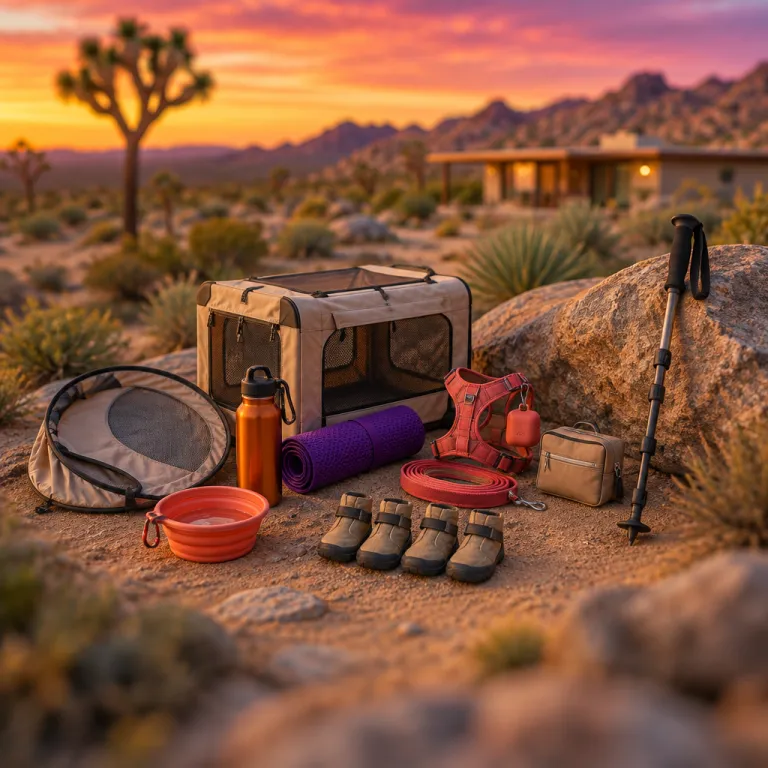
Bring a sturdy leash, collapsible water bowl, extra water, waste bags and any medications your dog needs. A familiar bed or blanket helps your pet settle in a new room, and paw balm or booties can protect against hot ground. If your dog is sensitive to noise or new environments, consider a crate or travel kennel to create a secure retreat inside the hotel.