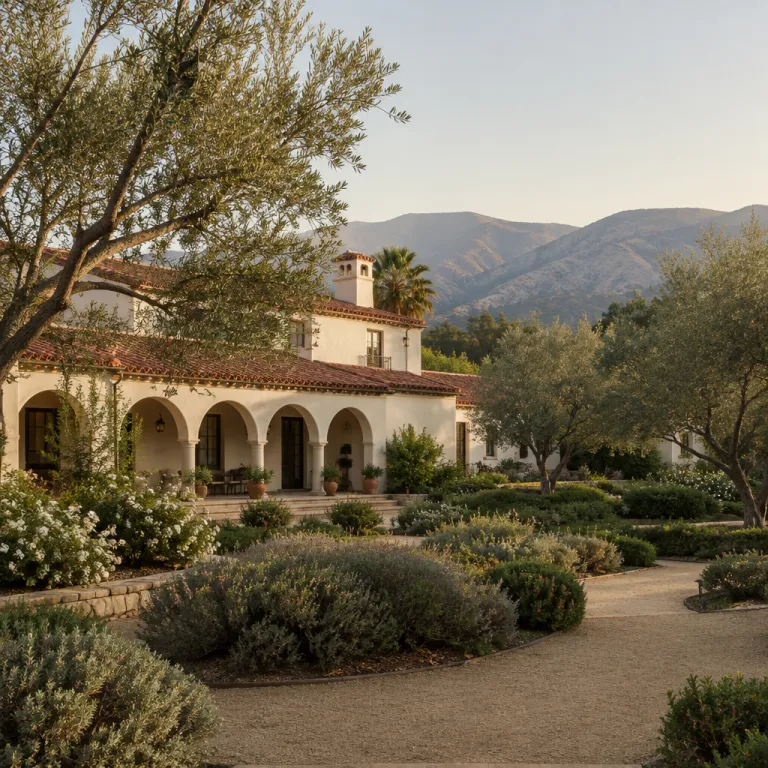
Why the George Washington Smith estate in Montecito shapes where you stay
The story of the George Washington Smith estate in Montecito quietly defines what refined coastal hospitality means in this part of California. When you choose a hotel near Montecito in Santa Barbara County, you are stepping into a landscape where Spanish Colonial Revival architecture is not a theme but a lived tradition. Understanding how this architect worked here helps you judge whether a property truly reflects the region or just imitates its surface details.
Smith, often referred to simply as George Washington Smith, was an architect whose work in Montecito, Calif set a benchmark for gracious domestic living. His estates, including the celebrated Casa del Herrero historic house museum, were built with hand-trowelled plaster, deep arcades and carefully framed garden views that still guide local design decisions. When a hotel claims inspiration from this architecture, you should expect similar attention to proportion, light and indoor–outdoor flow rather than decorative clichés.
Smith’s legacy in Montecito is especially visible in how properties handle their gardens and courtyards. He designed houses where every principal room opened toward a view, and where the estate grounds felt like an extension of the living spaces. Today, the most compelling hotels near Montecito, Calif echo that approach, using cloistered patios, shaded loggias and layered planting to create privacy while still celebrating the Santa Barbara coastline.
Casa del Herrero, now operated as a historic house museum, is the clearest expression of this vision. The estate sits on roughly 11 acres (about 4.5 hectares), and its architectural design unites house, garden and mountain backdrop into a single composition. According to its National Historic Landmark and National Register of Historic Places listings, the property is recognised as one of the finest examples of Spanish Colonial Revival architecture in California. For travellers, touring this museum before or during a stay provides a reference point, allowing you to evaluate whether your chosen property genuinely channels George Washington Smith or merely borrows his name.
Local preservation efforts around Smith-designed houses have also influenced hotel development. Restoration projects in Montecito and greater Santa Barbara favour conservation over aggressive modernization, which means many properties retain low silhouettes, clay tile roofs and whitewashed walls reminiscent of Spanish Colonial and Colonial Revival precedents. When you browse room photos, look for these cues, as they often signal a deeper respect for the original architectural language.
The narrative around Smith’s Montecito estates also intersects with regional institutions such as the University of California in Santa Barbara. Scholars and students frequently study Smith renderings, original drawings and archival materials in local architecture museum collections to understand how his work shaped coastal California architecture. That academic attention reinforces the area’s reputation, encouraging hotels and guest houses to align their own architectural design with this heritage rather than chasing short-lived trends.
Reading Spanish Colonial Revival details when choosing a Santa Barbara stay
When you compare hotels around Santa Barbara and Montecito, the influence of Spanish Colonial Revival architecture appears everywhere. Arched colonnades, red clay tiles and wrought-iron balconies all trace back to the same design vocabulary that defines the George Washington Smith house tradition in Montecito. Learning to read these details helps you distinguish between authentic architecture and superficial styling.
George Washington Smith was a leading architect of this movement, blending Andalusian farmhouse references with California light and climate. His houses in Montecito, Calif, including Casa del Herrero and the Gallagher House, show how a carefully scaled house in Montecito can feel both intimate and grand. When a hotel claims Spanish Colonial inspiration, check whether its courtyards, staircases and loggias create similar layered experiences rather than just repeating arches along a façade.
Look closely at how a property handles its plaster, roofing and ironwork. Smith designed walls with hand-trowelled finishes that catch the sun softly, and he used clay tiles not only on roofs but also as decorative accents around windows and fountains. Hotels that take this kind of architectural design seriously often commission custom iron grilles, lanterns and gates, echoing the art and craft sensibility found in the original Montecito estates George Washington Smith built.
Interior spaces should continue the story rather than break from it. In the best Santa Barbara properties, you will see timber ceilings, patterned tiles and restrained colour palettes that reference Spanish Colonial and Colonial Revival traditions without feeling like a stage set. This is where Smith’s influence becomes practical for guests, because such interiors usually offer cooler rooms in summer and a calm, cohesive atmosphere year-round.
For travellers who care about design details, proximity to Casa del Herrero as a house museum is a real advantage. Guided tours there reveal original furniture, textiles and an art collection that show how architecture, landscape and interiors were conceived as a single work. One of the most helpful comments from the site’s own information is that Casa del Herrero’s mission is to “preserve period architecture, showcase gardens and art collections, and educate the public via tours,” a statement echoed in both the foundation’s materials and its National Historic Landmark documentation.
If you want to go deeper into Santa Barbara style before booking, specialised editorial guides on elegant Santa Barbara style homes for hotel guests can be useful. They often reference Washington Smith and other architects whose work shaped the region’s visual identity. Cross-referencing those examples with hotel photography allows you to see whether a property’s design is genuinely rooted in local precedent or simply borrowing a few motifs.
How the Casa del Herrero estate informs modern coastal hotel design
Casa del Herrero, the most famous George Washington Smith estate in Montecito, operates today as a meticulously preserved historic house museum. The property sits along East Valley Road in Montecito, framed by the Santa Ynez Mountains and cooled by Pacific breezes. For hotel guests, a visit here is less about nostalgia and more about understanding how a single estate can shape an entire region’s hospitality design.
The house itself is a textbook example of Spanish Colonial Revival architecture in California. George Washington Smith designed the main residence with asymmetrical wings, intimate courtyards and a series of rooms that unfold gradually toward the gardens. This approach to architectural design, where circulation routes always terminate in a framed view or a planted court, is now echoed in many Santa Barbara and Montecito hotels that prioritise meandering paths over straight corridors.
Gardens at Casa del Herrero are not an afterthought but a central part of the estate. Landscape designers such as Ralph Stevens and Lockwood de Forest collaborated with Smith, creating terraces, alleys and fountains that extend the house into the land. When you evaluate a hotel property nearby, pay attention to whether its outdoor spaces feel similarly integrated, because that is a hallmark of the Montecito houses George Washington Smith designed.
The museum’s art and design collection also offer clues for contemporary interiors. Original ceramics, wrought-iron pieces and custom furniture show how art and design can be functional, not merely decorative, and how a restrained palette allows craftsmanship to stand out. Hotels that reference this art-collection ethos often feature locally made tiles, hand-woven textiles and bespoke lighting rather than generic imported décor.
Casa del Herrero’s status as a National Historic Landmark and its listing on the National Register of Historic Places have implications for nearby development. Preservation guidelines encourage new projects, including hotels, to respect established massing, rooflines and materials, reinforcing the Spanish Colonial and Colonial Revival character of Montecito, Calif. As a guest, you benefit from this framework because it keeps the area’s visual noise low and its architectural coherence high.
Because the estate functions as a museum, issues such as copyright and image use are handled carefully. Any hotel or design studio that wants to reproduce Smith renderings, archival photographs or detailed renderings and elevations from architecture museum collections must secure appropriate copyright permission from the Casa del Herrero Foundation or other rights holders. This respect for intellectual property mirrors the broader respect for physical heritage, and it is another sign that the George Washington Smith legacy is treated as a living reference rather than a marketing slogan.
Choosing a hotel that reflects George Washington Smith’s coastal California ethos
When you start shortlisting hotels near Montecito and Santa Barbara, it helps to translate Smith’s design principles into practical selection criteria. Begin with setting and orientation, because this architect always positioned each house to capture a specific view and microclimate. A property that faces the ocean or mountains with generous terraces and shaded verandas is more likely to deliver the same sense of place.
Room layouts matter as much as façades. George Washington Smith designed houses where circulation felt intuitive, with rooms arranged around courtyards and gardens rather than along anonymous internal corridors. Look for hotels that offer suites opening onto patios, cloistered walkways or small planted courts, since these echo the house Montecito patterns that made his estates so livable.
Material choices are another clear indicator. In the best Santa Barbara properties, you will see lime plaster walls, timber beams and terracotta floors that reference both Spanish Colonial and Colonial Revival traditions. These materials age gracefully, and they connect directly to the architectural language of the original Montecito estates George Washington Smith built, including Casa del Herrero and the Gallagher House.
Pay attention to how a property handles art and furnishings. Smith’s interiors balanced European antiques with custom pieces, creating an art collection that felt curated rather than crowded. Hotels that follow this approach often feature a small but thoughtful design collection, sometimes partnering with local galleries or the nearby University of California to showcase regional artists.
Service style can also reflect architectural values. Properties that truly understand the George Washington Smith ethos tend to emphasise calm, unhurried hospitality, allowing guests to inhabit the estate like a private house. This is especially evident in smaller Montecito, Calif addresses, where staff know the local architecture museum schedules, Casa del Herrero tour times and the best walking routes between historic properties.
For travellers who plan to combine design appreciation with coastal leisure, location relative to the shoreline is crucial. Guides to hotels near the best surfing beaches in California can help you balance architectural interest with easy beach access. The most rewarding stays often place you within a short drive of both the key Montecito houses Smith designed and the Pacific, so you can move effortlessly between museum visits, garden tours and time on the sand.
From museum tours to room keys: planning an architecture focused stay
Design-led travellers often build their Santa Barbara itineraries around the George Washington Smith landmarks in Montecito. A typical day might begin with a docent-led tour at Casa del Herrero, where you walk through the historic house museum and its carefully maintained gardens. Later, you return to a nearby hotel whose architectural design echoes the same Spanish Colonial vocabulary, creating a seamless narrative between public heritage and private retreat.
Because tours at Casa del Herrero usually run on fixed days and times, advance planning is essential. Tickets are limited, and the estate’s 4.5-hectare property requires comfortable walking shoes, especially if you want to explore the more remote garden rooms. Aligning your hotel booking with available tour slots ensures you can experience this Montecito estate at a relaxed pace rather than rushing between commitments.
Many hotels in Montecito and Santa Barbara now curate small architecture and design experiences for guests. Some offer printed walking maps that highlight Smith-designed houses visible from public roads, while others arrange private guides who can explain the nuances of Spanish Colonial and Colonial Revival details. When you enquire, ask specifically whether staff are familiar with George Washington Smith, Casa del Herrero and the broader architecture museum landscape in California.
Academic institutions also play a role in deepening your stay. The nearby University of California at Santa Barbara maintains archives and teaching collections that include Smith renderings, historic photographs and other materials related to regional architecture. While access may be limited, public exhibitions or lectures sometimes coincide with peak travel seasons, offering another way to engage with the Montecito work of this architect.
Photography enthusiasts should be aware of copyright considerations. While most hotels welcome personal photography, estates such as Casa del Herrero and other historic properties may restrict commercial use of images, especially those showing the art collection or detailed renderings and elevations. Respecting these guidelines not only protects copyright but also supports the institutions that preserve the architectural heritage you came to enjoy.
Evenings are an ideal time to reflect on what you have seen. Sitting on a hotel terrace that overlooks the Santa Barbara coastline, you may notice how the rhythm of arches, the weight of timber beams and the glow of lanterns all trace back to the Montecito houses George Washington Smith designed. That continuity between museum, university, house and hotel is what makes an architecture-focused stay here feel unusually coherent.
Coastal California design ideas to bring home from Montecito
A stay near the historic estates George Washington Smith built in Montecito does more than shape your hotel choice. It also offers a catalogue of coastal California design ideas you can adapt at home, whether you live by the sea or far inland. Observing how this architect handled light, proportion and materials gives you a practical toolkit for creating calmer, more grounded spaces.
Start with the relationship between indoors and outdoors. Smith designed houses in Montecito, Calif so that nearly every principal room opened to a terrace, loggia or garden court, blurring the line between house and landscape. At your hotel, notice how French doors, shaded porches and low garden walls create a series of outdoor rooms, then consider how similar thresholds could work on your own property, even at a smaller scale.
Colour and texture are equally instructive. The palette associated with these Montecito estates leans toward white or cream plaster, warm timber and terracotta, punctuated by deep greens and occasional cobalt blues. Hotels that follow this approach feel timeless rather than trendy, and you can replicate the effect with lime-washed walls, natural fibre rugs and a restrained art and design programme that favours craftsmanship over clutter.
Furniture placement in these estates also offers lessons. Instead of pushing pieces against walls, Smith arranged seating in conversational clusters, often oriented toward a fireplace or a garden view. When you return from Santa Barbara, you might reorient your own living room around a window or courtyard, echoing the way a house in Montecito frames its best outlooks.
Smaller details from these George Washington Smith houses can translate surprisingly well. Hand-painted tiles around a kitchen niche, a wrought-iron lantern in an entry or a simple bench beneath a tree all reference Spanish Colonial and Colonial Revival traditions without overwhelming a contemporary home. Many hotels source such elements from local artisans, and some maintain small design catalogues or supplier lists that guests can consult.
Finally, consider how these estates balance privacy and openness. High garden walls, filtered views and layered planting create a sense of refuge even in relatively dense parts of Santa Barbara County. Observing how your hotel uses hedges, pergolas and courtyards to modulate exposure can inspire changes to your own property, allowing you to carry a little of the Montecito calm associated with George Washington Smith back into everyday life.
Key figures and facts about the George Washington Smith estate in Montecito
- Casa del Herrero, the best-known George Washington Smith estate in Montecito, occupies approximately 11 acres of land in Montecito, Calif, according to its National Register of Historic Places designation.
- The estate is recognised as both a National Historic Landmark and a listed property on the National Register, underscoring its national significance within Spanish Colonial Revival and Colonial Revival architecture in California.
- Guided tours of the house museum and gardens are typically offered on specific weekdays, with advance reservations required and visitor numbers limited to protect the fragile architecture and the on-site art collection.
- Landscape and architectural collaboration at Casa del Herrero involved multiple figures, including George Washington Smith as lead architect and designers such as Ralph Stevens and Lockwood de Forest, illustrating a multidisciplinary approach to design.
- Ongoing restoration and conservation work at the estate is managed by a dedicated nonprofit foundation, which relies on admission fees, donations and licensed use of Smith renderings and images to fund preservation.
FAQ about staying near the George Washington Smith estate in Montecito
Who owns Casa del Herrero now, and can visitors stay overnight there?
Casa del Herrero, the most prominent George Washington Smith estate in Montecito, is owned and managed by the Casa del Herrero Foundation, a nonprofit organisation. The property operates as a historic house museum rather than a hotel, so overnight stays are not offered on site. Visitors typically book nearby hotels in Montecito or Santa Barbara and visit the estate on a scheduled tour.
Can the public tour the George Washington Smith estate in Montecito?
Yes, the public can tour Casa del Herrero, which represents the archetypal George Washington Smith estate in Montecito. The foundation offers docent-led tours of the house and gardens on designated days, usually with advance reservations and an admission fee. These tours provide rare access to original interiors, gardens and the art collection that are not visible from the street.
What architectural style should I look for in hotels inspired by George Washington Smith?
Hotels that reference the Montecito work of George Washington Smith usually draw from Spanish Colonial Revival and related Colonial Revival styles. You can expect white or cream plaster walls, red clay tile roofs, arched openings and courtyards that blur indoor and outdoor spaces. Properties that take this architectural design seriously often feature custom ironwork, timber ceilings and carefully framed views rather than generic Mediterranean styling.
How close are Montecito hotels to the Casa del Herrero estate and Santa Barbara attractions?
Many Montecito, Calif hotels sit within a short driving distance of Casa del Herrero, often less than 5 kilometres depending on traffic and exact location. These properties also provide convenient access to downtown Santa Barbara, the waterfront and the broader coastal region. When booking, check maps for proximity to both the estate and the beach to balance architecture-focused sightseeing with leisure time.
Are there copyright restrictions on photographing the George Washington Smith estate?
Personal photography is generally allowed in many outdoor areas during tours of Casa del Herrero, but commercial use of images is restricted. The Casa del Herrero Foundation controls copyright for official photographs, Smith renderings and certain interior views, especially those showing the art collection. If you plan to publish or sell images, you must request explicit permission from the foundation or relevant rights holders.